A Painter of Whispers
The Art of Steve Seinberg
by Robert Sherer
Although but thirty years of age Steve
Seinberg has already reached a level of technical facility and
philosophical stance usually identified with artists far beyond his
years. Seldom do we witness an emerging artist move so effortlessly
into a mid-career stride. To say that Seinberg is precocious with
the language of painting would be an understatement, his vocabulary
of paint applications and references are remarkable for any age.
Because the various elements within his pictures are determined by
what he intuits at each moment of the process of creation, it is
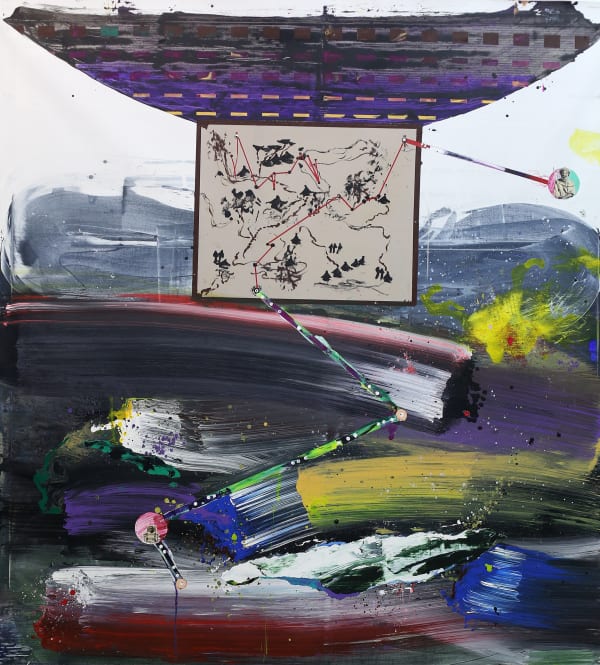
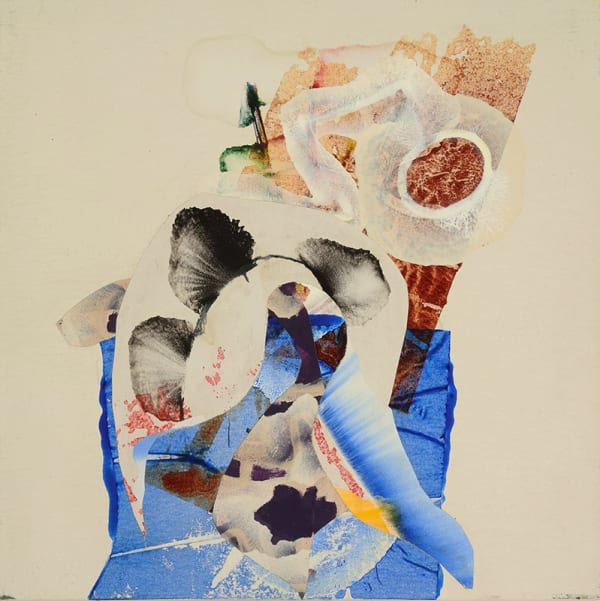
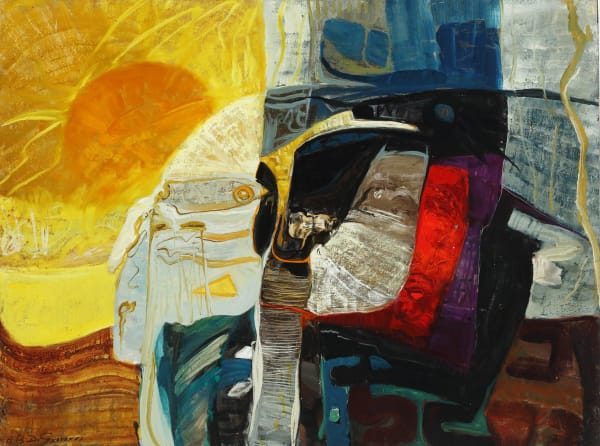
always a pleasure to explore his work. During a typical walk across
the juicy surface of one of his paintings our eyes might encounter a
host of elements: a line of poetry, a bit of botanical information,
a reference to a teacher, a simple observation, a tip of the hat to
a personal hero. This combined process of sampling visual and
literary sources translates into an exciting experience for the
viewer.
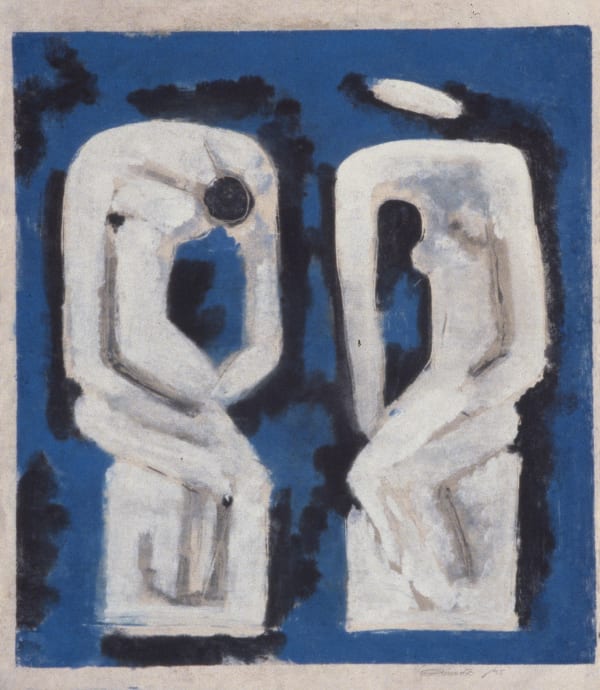
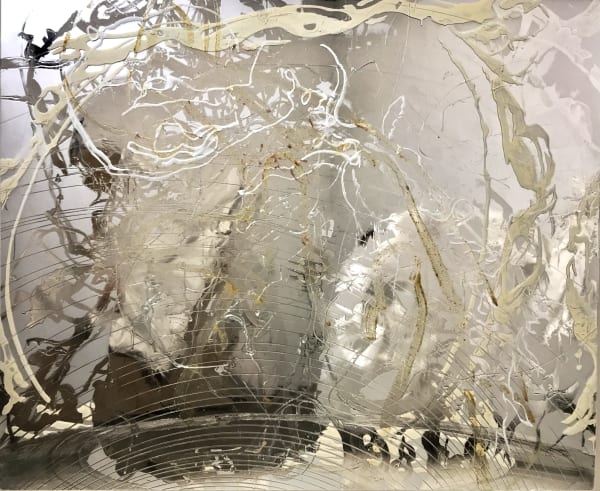
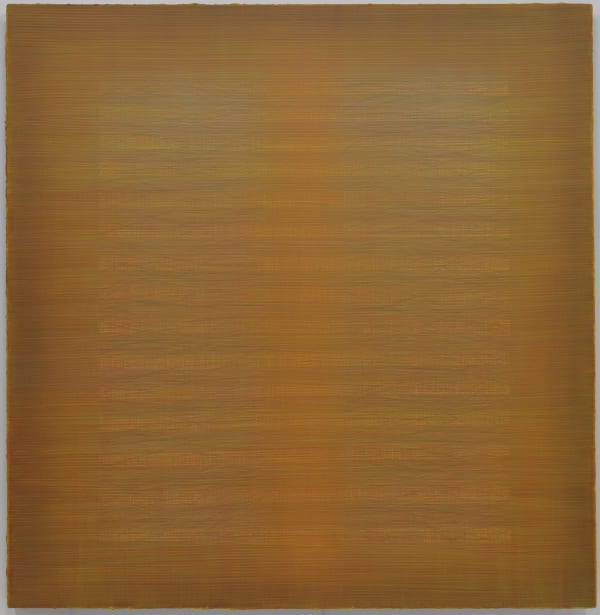
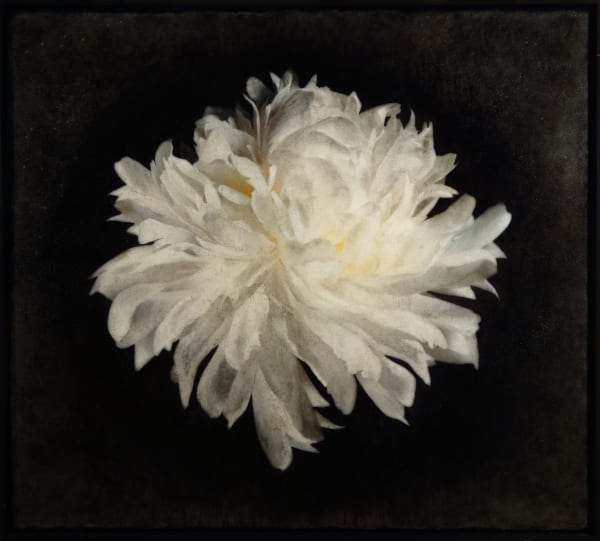
Of the primary formal elements within a Seinberg work of art, none
is more discussed than the issue of color. It is not only too easy
but is also incorrect to describe Seinberg's paintings as
monochromatic, meaning that they are variations on a theme of one
color: white. Clearly, a multitude of colors are to be found in his
paintings. In fact, the presence of this prismatic effect supports
the belief of physicists that white isn't the absence of color but
rather is an amalgam of all of the colors of the spectrum.
Seinberg's technique coaxes these colors out of the white.
In the art world this type of light painting is commonly referred to
as 'high- key painting' because it primarily uses the upper values
of the dark-to-light scale. A great deal of what we are allowed to
see and not see in Seinberg's art is determined by the hiding power
of these white pigments he uses. Some have the opacity of an
avalanche utterly covering all trace of the ground. Others have the
masking strength of a semitransparent layer of ice where only faint
ghostlike impressions of the original expression can still beseen
beneath.
Needless to say, it takes a tremendous sense of nuance and power
ofrestraint to create this type of art. The elements fade in and out
of the paint in an almost imperceptible manner. To be touched by
this work is not unlike experiencing a subtle glance, or a faint
whisper held under the breath, or the wind's light kiss on your
cheek. At the risk of sounding flippant, either you get it or you
don't. These paintings are made by a very sensitive/perceptive
person for a very sensitive/perceptive audience. This is the visual
art of people who know that what is not said is often more important
than the spoken word.
Steve Seinberg continues to remain one of the most consistently
interesting young contemporary artists to watch. His is a steadfast
belief that abstract painting is still a viable means of expressing
the inexpressible. Not only does he defy the convention of Abstract
painting by losing all sense of representational imagery but he also
defies the convention of Nonobjective painting by refusing to be
loud or vulgar to prove his modernity or American brashness.
Through the years, Seinberg's journey to find an "essence of
expression" has left us a trail strewn snatched up by collectors.
This latest body of art represents his most comprehensive exhibition
to date. In it we see an array of the pictorial elements he has
explored during the last decade but we also see some changes, some
flirtations hinting at a slight aesthetic shift. Only time will tell
where he takes us next.
Copyright 2000
|